
Why is facilitating at an Unconference different?
An unconference flips the traditional conference model on its head.
An unconference thrives on peer-to-peer facilitation — a style of hosting where no one is “in charge” of the content, and the facilitator’s role is to help the group self-organize, ensure everyone’s voice can be heard, and guide the conversation along the chosen topic.
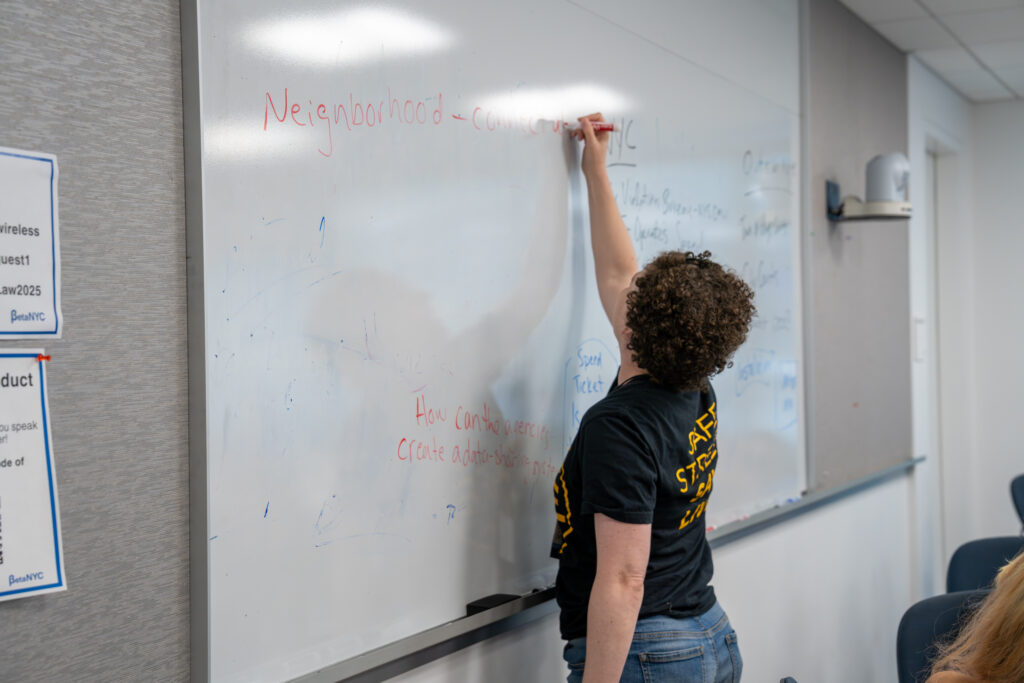
What is peer led facilitation?
A way of guiding a group so everyone can shape the conversation, decisions, and outcomes.
- Traditional facilitation = one person drives the bus.
- Peer-led facilitation = the group chooses the destination, and the facilitator helps everyone get there.
Your Role as Facilitator:
- Set the tone – Explain the topic in five to ten minutes.
- Frame, don’t dictate – Explain how the discussion/activity will be structured.
- Include everyone – Give all folks a chance to speak during sharing times. Invite quieter voices.
- Manage time together with the session scribe – Keep the group aware.
- Intervene only when needed – Step in if stuck or to invite more voices
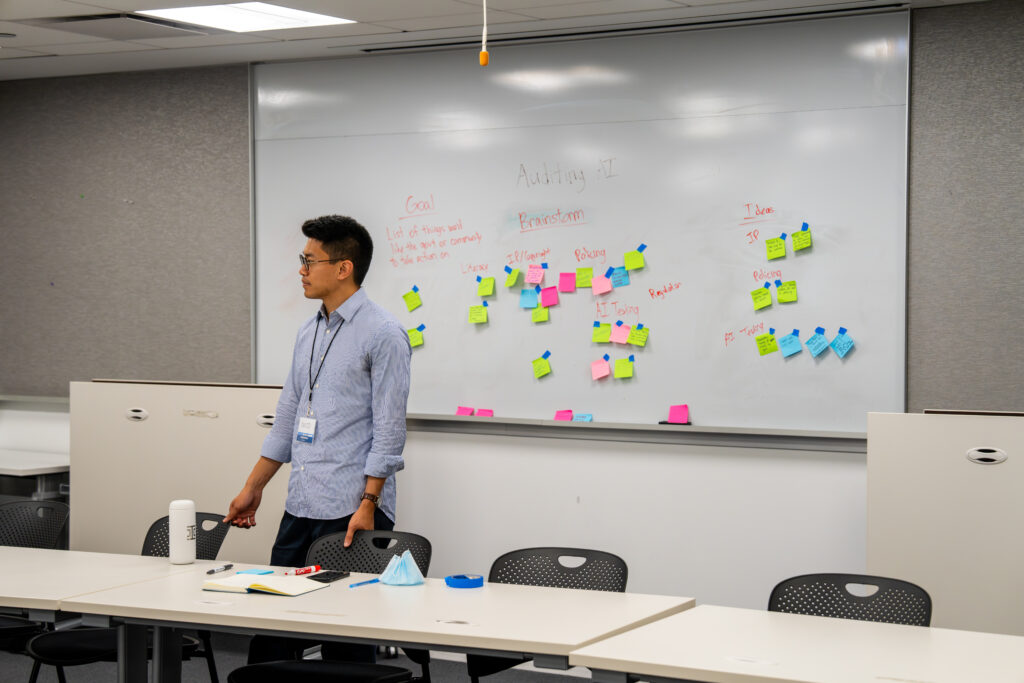
Example formats for peer-led facilitation
These are some examples of how to plan a peer-led unconference session, feel free to build on these ideas or try something new. The key is to make space for everyone to contribute to the session.
- The longer formal presentation: This is tricky, because it’s difficult to make a formal presentation interactive. But if you have a big, well-developed idea, you can pull it off.
- Birds of a feather: Participants name challenges or questions related to the shared theme, and the group clusters them to decide what to explore together. The conversation flows from peer experience, with the facilitator helping connect patterns and voices.
- A short presentation to get things started: 5-15 minutes of prepared material/comments by the session leader, followed by an interactive discussion.
- Group discussion: Someone identifies a topic they are interested in, others come to join the conversation and an interesting discussion happens.
- My Big (or Little) Question: You have a question you want to know the answer to, and you think others in the group could help you answer it. This format could also just be the seed of a conversation.
- Show and tell: You have a cool project, a demo, or just something to show and let people play with that is the springboard for all the conversation in the session. Alternatively, you can invite others to bring their own items to show and tell (perhaps with a theme), and everyone takes a turn sharing.
- Learn how to do X: If you’re inclined to teach, this can be simple and effective. Bring the equipment that you need, and have a plan that will let you teach five, ten, or 15 people how to do something all at the same time.
- Round Robin: After introducing a topic, give each participant a chance to speak on it.
- Voting: write ideas about topics on sticky notes or on a board and everyone gets to vote on what to discuss.
- Idea Storm: If there are several topics to discuss, participants can organize into small groups to discuss and come back together to share at the end.
- Reverse Ideastorm: Instead of “What makes a good meeting?”, invite everyone to share “What makes a bad meeting?”
- How-Now-Wow Matrix: Participants place ideas into a How (hard to do), Wow (innovative but risky), or Now (ready to act) matrix to quickly assess feasibility and impact. The group discusses patterns and prioritizes which ideas to explore or move forward with together.
- Future Workshop: Introduce the session, give each participant a paper and pen, ask them to write down pain-points with that idea, then ask them to fantasize about their desired future and share.
- Six Thinking Hats: Introduce a topic, split the participants into six groups who evaluate the topic on the six different “hats” or perspectives. Each group brainstorms and then shares with the Blue hats going between and trying to create consensus.
- White Hat: provides information known or needed. “The facts, just the facts.”
- Yellow Hat: positives about the idea that would give value or benefit
- Black hat: risks, difficulties, or challenges with the idea (what might not work)
- Red Hat: feelings and intuitions people might have about the idea
- Green hat: creative possibilities and new ideas or innovations
- Blue Hat: big picture, first principles, and synthesizers
- Brainwriting: Introduce the topic and each person gets an index card. Each participant writes one idea about the topic on the index card and passes it to the next person. That person writes an idea inspired by what they read. At the end the cards are shared.
- Skill share/show-and-tell: Invite folks to share their knowledge, skill, or experience on the topic as a conversation springboard